

Building Faster Is Not Enough: Why Should Real Estate Investors in Portugal Consider the Entire Development Cycle?
Portugal’s real estate market presents an apparent contradiction: housing demand remains strong and residential property prices continue to rise, yet new housing supply struggles to keep pace in the short term.
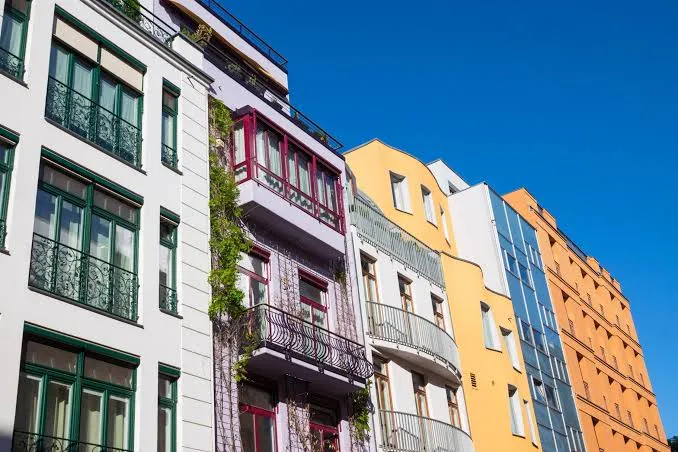
For homebuyers, this may simply mean fewer properties to choose from. For real estate investors, however, it raises another often-overlooked question: how long does it take for a real estate investment to become an asset that can actually generate cash flow?
Real estate development does not begin when construction starts. Before the first machinery arrives on site, a project may already have gone through land acquisition, planning and design, licensing and approvals, financing, and technical assessments. OECD data shows that in 2023, obtaining a building permit took an average of approximately 545 days in Lisbon and 453 days in Porto. In other words, before discussing how long it takes to construct a building, the project itself may already have spent a year or more in the pre-construction phase.
For ADL, with its long-standing involvement in real estate development in Portugal, this is also an issue we continuously consider across our projects: why does faster construction not necessarily mean a shorter real estate investment cycle?
1. Portugal’s Real Estate Market: Demand Remains, but Supply Takes Time
Portugal’s real estate market in 2026 presents a noteworthy trend: residential transaction volumes have declined, while property prices have continued to rise significantly.
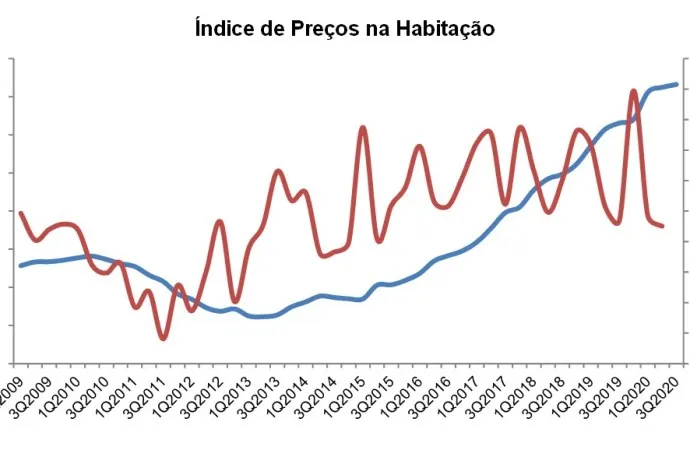
According to JLL, residential property prices in Portugal increased by approximately 14% year-on-year in the second quarter of 2026. During the first half of the year, residential transaction volumes fell by 7% year-on-year, with transactions involving existing homes declining by 10%, while new-build transactions increased by 14%. JLL identifies persistent housing supply constraints as one of the key factors supporting residential property prices.
The first-quarter figures illustrate this dynamic even more clearly. A total of 37,745 homes were sold in Portugal, down 8.7% year-on-year, while the House Price Index increased by 17.8%. The total value of transactions reached nearly €9.921 billion, representing a 3.2% year-on-year increase.
This shows why Portugal’s real estate market cannot be assessed solely by looking at transaction volumes.
When demand remains present but new housing supply cannot enter the market quickly, the supply-demand imbalance may continue to support property prices.
This raises an important question: if housing demand exists, why can supply not increase more quickly?
The answer lies partly in the nature of real estate development itself. Housing is not an ordinary product whose output can be rapidly increased. Turning market demand into actual housing supply requires a series of stages, including land acquisition, planning and design, project approvals, financing, construction, and final delivery.
Therefore, understanding the real estate market requires looking beyond how many homes are currently under construction. It is equally important to consider how long it takes for new housing demand to translate into actual housing supply.
2. How Long Does Real Estate Development Actually Take?
Before construction begins, a real estate project may already have gone through a lengthy pre-development process.
The OECD’s Economic Survey of Portugal 2026 specifically examines housing supply and building permit procedures in Portugal. According to the data, the time required to obtain building permits in 2023 varied significantly between cities: approximately 545 days in Lisbon, 453 days in Porto, and 548 days in Coimbra. Even in Funchal, where the process was comparatively faster, it still took 272 days.
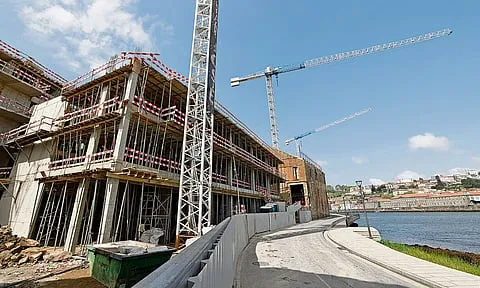
In recent years, Portugal has introduced measures such as Simplex Urbanístico to simplify real estate development procedures. These include setting deadlines for certain approvals, introducing tacit approval mechanisms, and eliminating the previous use permit procedure, which could take between 65 and 155 days.
Nevertheless, these figures highlight an important point for real estate investors: the real estate development cycle is much longer than the construction period alone.
Even if the physical construction of a building takes just over a year, the actual period from the initial investment decision to the point when the asset enters the market may be considerably longer.
This is why simply asking “How can we build faster?” is not enough to fully understand the efficiency of real estate development.
3. Why Does the Development Timeline Directly Affect Investment Returns?
In real estate investment, time itself is a cost.
Suppose two real estate projects ultimately achieve a similar asset value, but one takes three years to complete while the other takes five. From an investor’s perspective, these are not equivalent investments.
The additional two years mean that capital remains tied up for longer, while the project is also exposed to a longer period of financing costs, fluctuations in construction costs, changes in market cycles, and execution risks.
Construction costs in Portugal are also continuing to change.
According to Statistics Portugal (INE), the cost of new residential construction increased by 6.8% year-on-year in July 2026. Material prices rose by 6.3%, while labour costs increased by 7.3%.
This means that when a project’s development timeline changes, the impact may extend far beyond a delay of a few months in delivery.
A longer construction period may affect the original cost budget, require financing to remain in place for longer and, in the case of income-generating real estate, delay the point at which rental income and operating cash flow begin to be generated.
At ADL, construction progress, cost control and the practical use of a project after completion are considered together from the development stage. During the early stages of a project, ADL assesses factors such as local demographics, education, employment, transport links and surrounding real estate supply to understand actual demand and define the target market and product positioning. Once a project enters the development and construction stage, we continue to monitor planning and approval procedures, key construction milestones, development progress and cost changes, adjusting subsequent arrangements according to the project’s actual progress.
In this sense, managing the development cycle is not simply about confirming an expected completion date. It involves continuously assessing whether the project is progressing in line with its original timeline, cost assumptions and market rationale.
Therefore, when comparing real estate investments, the expected return and the time required to achieve that return are equally important considerations.
4. Why Should Investors Look Beyond Market Supply and Demand When Investing in Portuguese Real Estate?
Portugal’s housing shortage and sustained residential demand in certain areas can help investors understand the broader market environment surrounding a real estate project. However, the ultimate investment outcome still depends on the individual project itself.

Even within the same city with strong housing demand, different projects may perform very differently. These differences can begin at the development stage: where the project is located, which target market it serves, what type of product is being developed, and whether it can actually be delivered within the planned cost and timeframe.
These differences continue after the project is completed.
For example, the rental performance of a residential project near a university may depend on actual accommodation demand from students and academic staff, rental cycles, unit layouts and local amenities. In areas with a concentration of business or industrial activity, projects targeting young professionals, corporate employees or business travellers may depend more heavily on transport accessibility, flexible living arrangements and operational services.
Therefore, “the market needs more housing” is a macro-level observation; “the market needs this particular project” is what matters when assessing an investment.
This is also an important distinction between investing in a development project and purchasing an existing property. Investors are not simply evaluating an asset that already exists. They are assessing whether an asset that has yet to be fully realised can be developed as originally planned and ultimately accepted by the market.
5. What Should Investors Evaluate When Investing in a Real Estate Development Project in Portugal?
When evaluating a real estate development project in Portugal, knowing that local property prices are rising, housing supply is limited, or that a project is expected to be completed within a certain number of years is not enough to determine whether the investment is suitable.
A more practical approach is to assess the project throughout its development cycle: whether it can be delivered as planned, whether there will be genuine demand once it is completed, how returns are expected to be generated, and how changes in key assumptions could affect the investment outcome.
(1) What Stage of Development Is the Project Currently At?
The first step is to understand what has already been completed. A project that is still in the early planning stage and one that has already secured key approvals and entered the construction phase may have similar expected completion dates, but the work still required and the uncertainties involved can be very different.
Investors can therefore look more closely at factors such as land ownership and title, planning conditions, the status of key approvals, whether construction has begun, and which major milestones remain before final delivery.
The earlier the project is in its development cycle, the more important it becomes to assess not only its future value, but also whether the conditions required for development can be achieved as expected.
(2) Where Will the Actual Demand Come From Once the Project Is Completed?
For investors, broad observations such as “Portugal has a housing shortage” or “property prices in this city are rising” are not enough. It is more important to understand the project’s specific location, target market, supply of comparable properties in the surrounding area, and whether the project’s positioning matches actual demand.
Student housing near a university, for example, should be assessed in relation to the number of students and academic staff, surrounding accommodation supply, rental cycles, and demand for the type of product being developed. Residential projects in business or industrial areas may depend more heavily on local employment, the presence of companies, transport connections, and housing demand from young professionals and business travellers.
Three questions are particularly important: Who is likely to buy or use the property? Why would they choose this project? Are there already sufficient alternative properties available in the market?
Macro-level supply and demand determine the broader market environment, while specific demand is more directly related to a project’s future sales, rental performance, and operations.
(3) At What Stage Will the Investment Begin to Generate Returns?
Not all real estate projects generate returns in the same way. Some primarily realise value through a sale after development is completed, while others are intended to be held over the longer term and generate cash flow through rental and operations. Some projects may combine development, ongoing operations, and an eventual exit.
Investors should therefore look beyond a single “expected return” and understand where the returns come from, when they are expected to begin, and which key assumptions need to hold for those returns to be achieved.
If returns depend primarily on future rental income, factors such as expected occupancy, rental levels, operating costs, and the time required to reach stable operations should be considered. If returns depend mainly on a future sale, investors should understand the market assumptions underlying the expected exit price.
The return figure itself is only the outcome; the logic behind how that return is generated determines whether the figure has a reasonable basis.
(4) What Happens If Actual Performance Differs from Expectations?
It is almost impossible for every variable in a real estate development project to remain unchanged throughout the entire process. Investors should therefore also assess the project’s ability to withstand changes.
What happens if completion is delayed by six months? Would higher construction costs significantly reduce the project’s profit margin? If occupancy is lower than expected, can cash flow remain sustainable? If market conditions change, does the project rely too heavily on a particular expected selling price?
Real estate investment does not require assuming that every possible risk will materialise. Instead, investors should understand which variables are most likely to affect the investment outcome and how sensitive the project is to changes in those variables.
This is one of the key differences between evaluating a real estate development project and simply observing property price trends.
6. From “Building a Property” to “Creating an Asset That Generates Value”
From initial market assessment, project positioning and planning to approvals, financing, development and construction, followed by delivery and subsequent use, the value of a real estate asset is gradually created throughout the entire development cycle.
Market Assessment → Project Planning → Approvals & Financing → Development & Construction → Asset Delivery → Use & Operations → Asset Value
This is also the approach that ADL follows in the development of real estate projects in Portugal.
For us, real estate development is not simply about completing a building. It begins with genuine market demand and considers land, location, product positioning, construction, and future use as interconnected elements within the same development cycle.
For example, a student housing project is not simply about “building residential properties near a university.” It requires understanding the actual demand for accommodation in the area, the type of housing students and academic staff need, and whether the completed spaces and amenities can effectively meet those needs. Similarly, residential projects targeting young professionals, corporate employees, or business travellers need to consider transport accessibility, lifestyle needs, residential flexibility, and future use cases from the development stage onwards.
Ultimately, these considerations lead back to one fundamental question: Will the real estate being developed today still be an asset that the market genuinely needs several years from now?
Expected returns tell investors what a real estate investment may deliver. Understanding how a project is planned, developed, and ultimately delivered helps investors go one step further and understand how that value is intended to be created.
Would You Like to Learn More About ADL’s Real Estate Development Projects?
ADL has extensive experience in real estate development in Portugal. Starting with location and market demand, we advance project planning, product positioning, and development and construction, while also considering the practical use of each property after completion and its long-term asset value.
If you are exploring real estate investment in Portugal, new-build residential properties, or real estate development projects, we invite you to discover ADL’s current projects. By looking at location, development progress, product positioning, and market demand, you can gain a clearer understanding of how a real estate asset progresses from planning to completion.
Looking for real estate investment opportunities in Portugal? Contact ADL to learn more about our properties for sale and projects currently under development.