

Portugal's Inflation Continues to Ease! Europe’s Cooling Inflation Trend Brings Positive Signals for the Property and Investment Markets
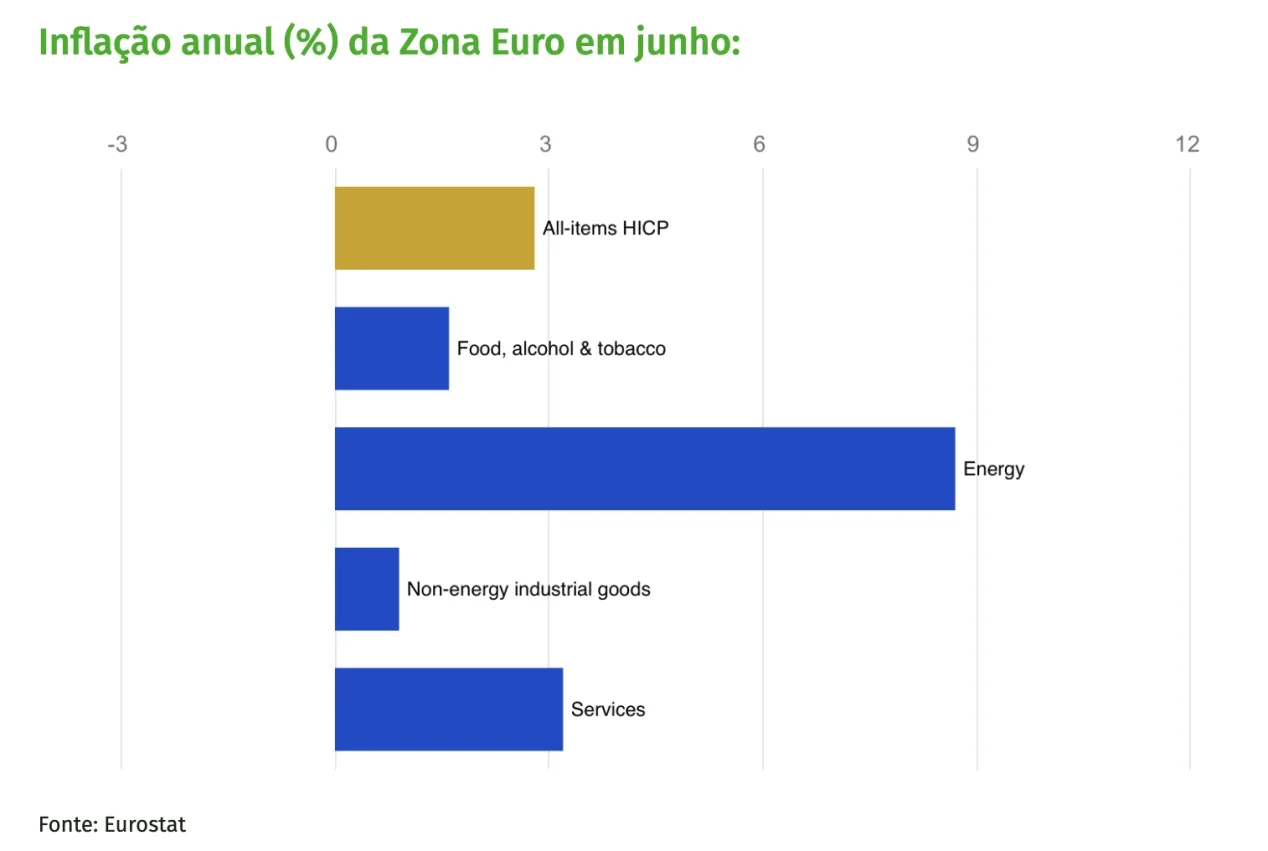
The latest inflation data released by Portugal and the Eurozone indicate that price pressures are gradually easing, renewing market attention on the future direction of interest rates and the property market.
According to the latest preliminary estimates released by Eurostat, the Eurozone’s annual inflation rate fell from 3.2% in May to 2.8% in June, marking its lowest level in recent months. The primary driver behind this decline was the significant moderation in energy prices, with annual energy inflation falling from 10.8% to 8.7%, making it the largest contributor to the overall slowdown in inflation.
Meanwhile, core inflation (excluding energy and food) also declined from 2.3% to 2.2%, indicating that underlying price pressures across Europe continue to ease.
Portugal’s Inflation Also Continues to Decline
As a member of the Eurozone, Portugal has followed the same downward inflation trend.
According to data released by Statistics Portugal (INE), Portugal’s Consumer Price Index (CPI) slowed from 3.3% in May to 3.2% in June, while the country’s Harmonised Index of Consumer Prices (HICP)—the measure used for comparison across the European Union—is estimated at 3.1% for June.
Although Portugal’s inflation rate remains slightly above the Eurozone average, the overall trend is moving in line with the rest of Europe, suggesting that price pressures are gradually stabilising.
Market Focus: Expectations of Further Interest Rate Cuts Are Increasing
For financial markets, easing inflation not only helps reduce the cost-of-living pressure on households but also improves the outlook for future financial conditions.
Analysts believe that if Eurozone inflation continues moving closer to the European Central Bank’s 2% target over the coming months, expectations for a more accommodative monetary policy are likely to strengthen.
Lower inflation generally points to lower financing costs over time, creating a more favourable environment for the property market, business investment and consumer spending.
Positive Signals for the Property Market
The real estate sector is particularly sensitive to changes in interest rates.
In recent years, Europe’s property market has been affected by a high-interest-rate environment, with rising borrowing costs and tighter financing conditions leading to a period of adjustment. As inflation continues to moderate, an improving financing environment could help restore market confidence and support a gradual recovery in housing demand.
For Portugal, continued inflows of international capital, population growth and corporate investment have helped maintain solid underlying demand in the property market. Should Europe enter a more accommodative monetary cycle, Portugal’s real estate sector could be well positioned to benefit.
Against a backdrop of ongoing global economic uncertainty, a stable macroeconomic environment, improving financial conditions and strong long-term growth potential continue to reinforce Portugal’s attractiveness as an investment destination in Europe.
Reference link:
For more details, please refer to: https://adlinvestment.com/en/about/